The 2026-27 Premier League, By the Numbers
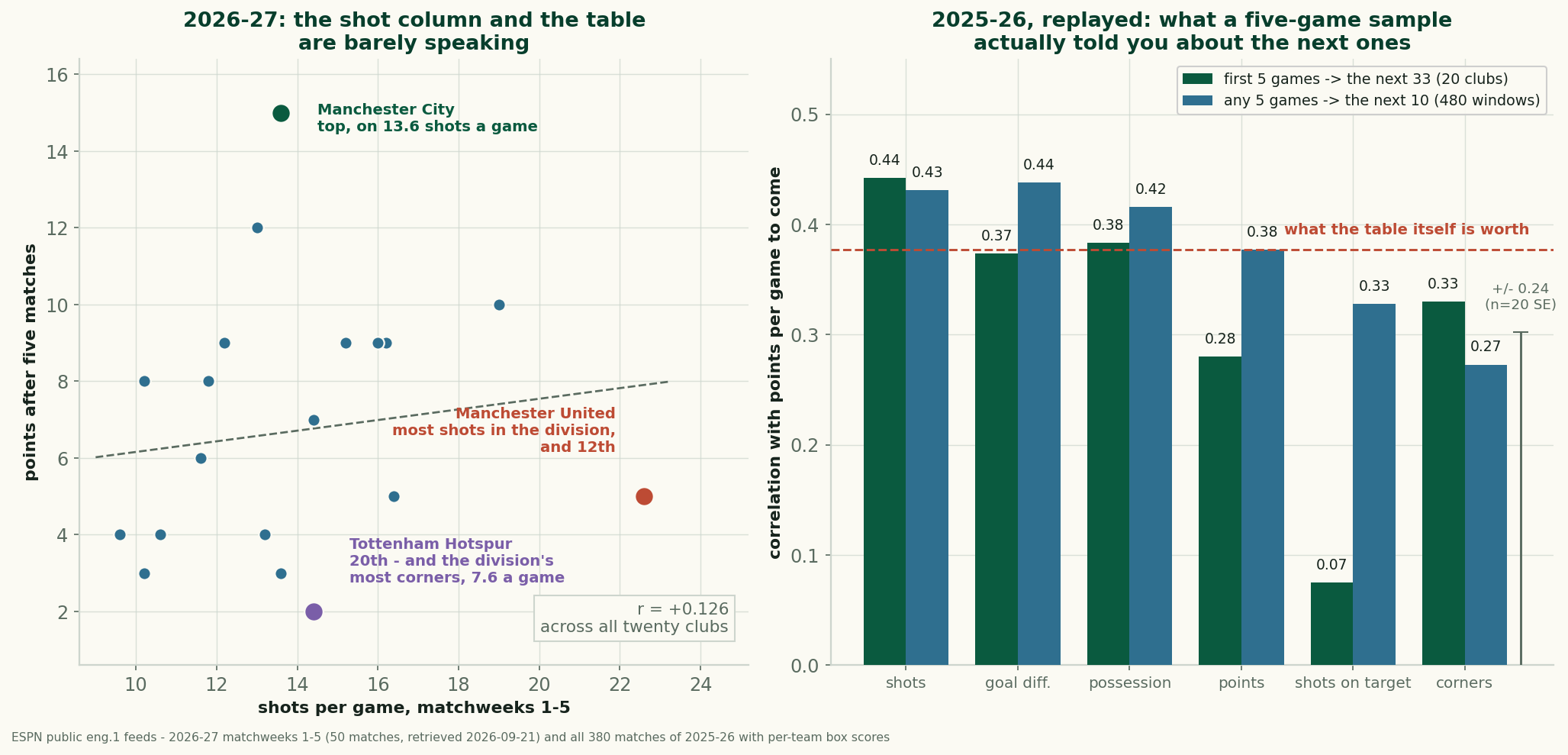
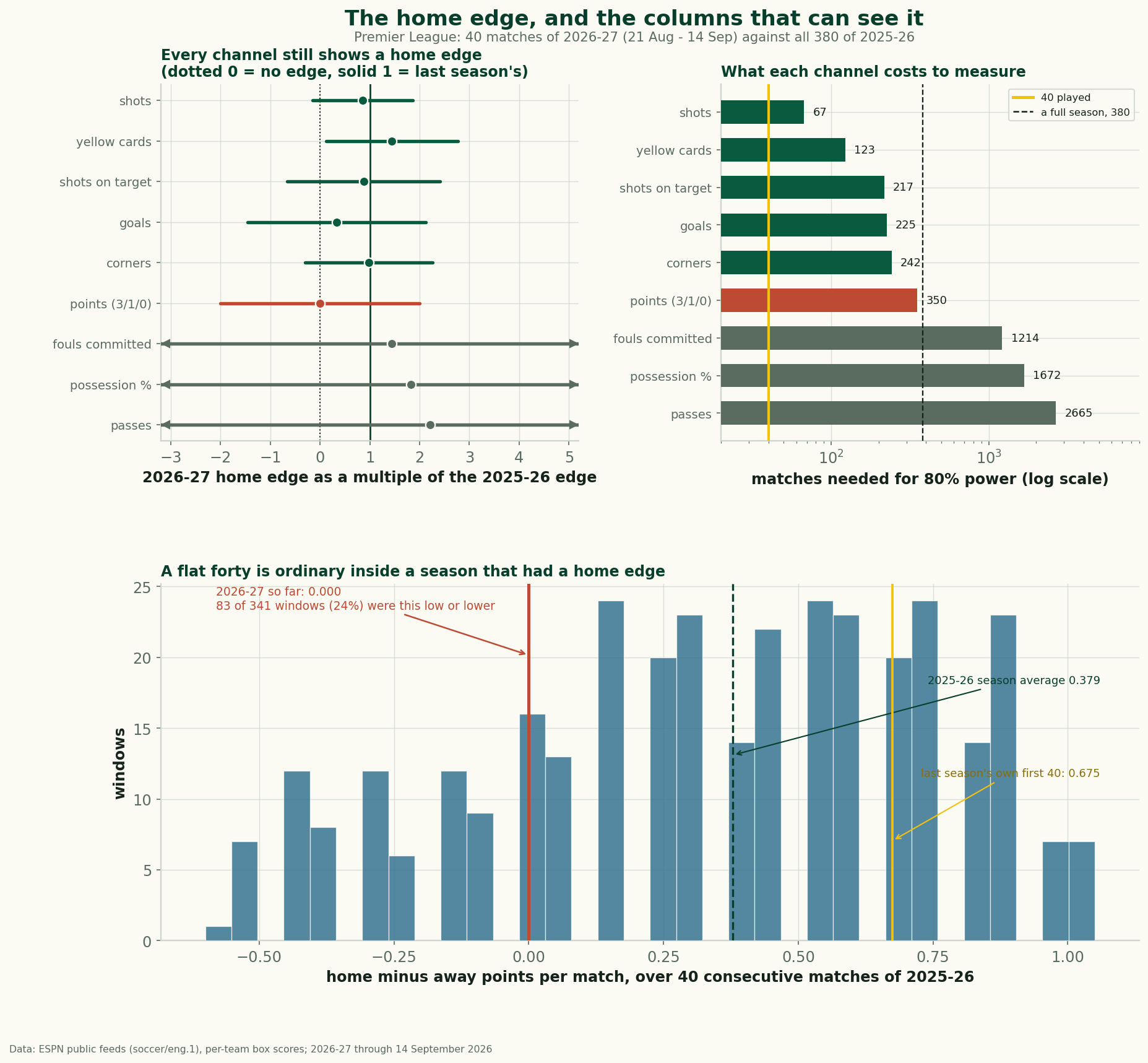
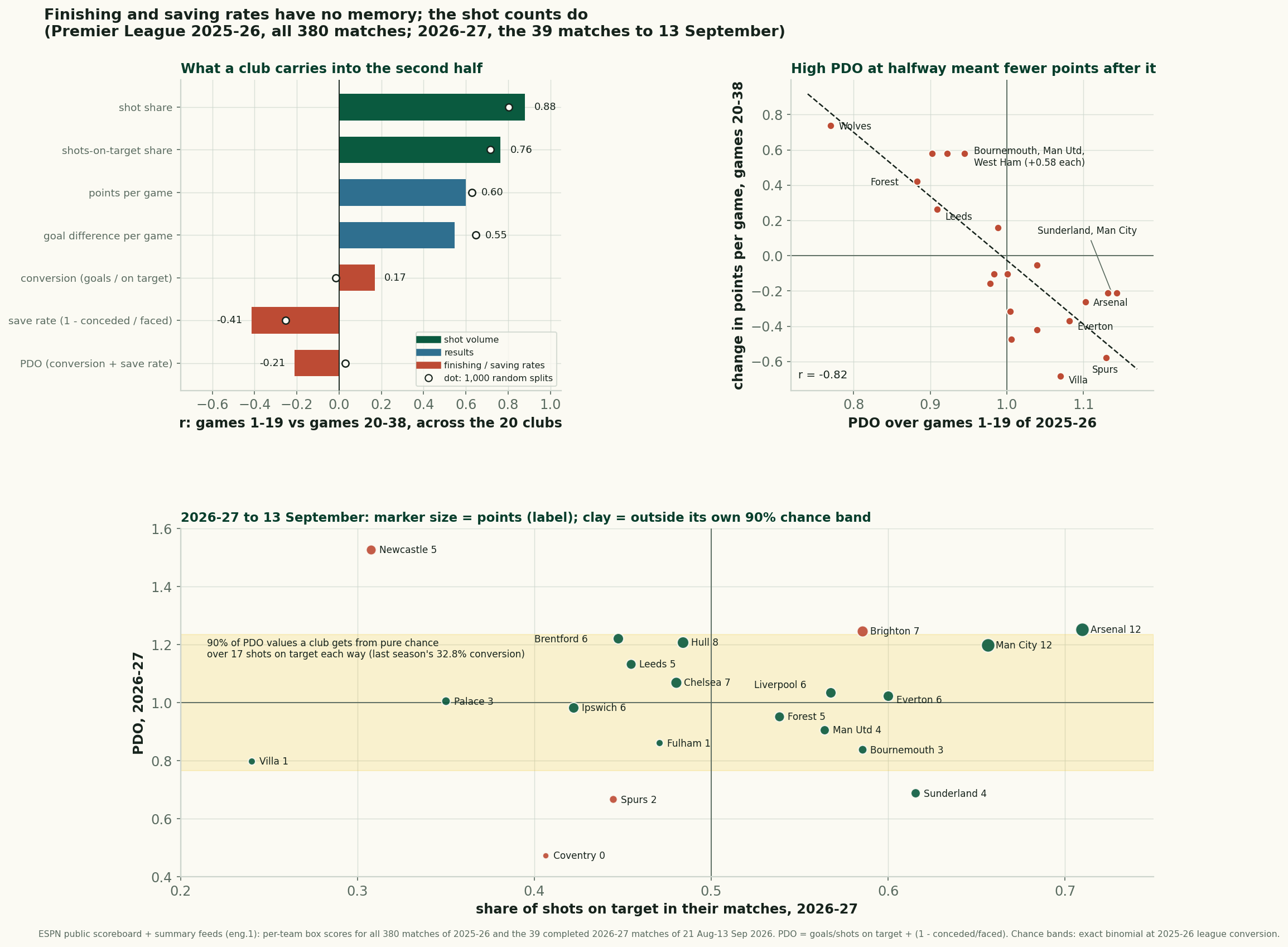
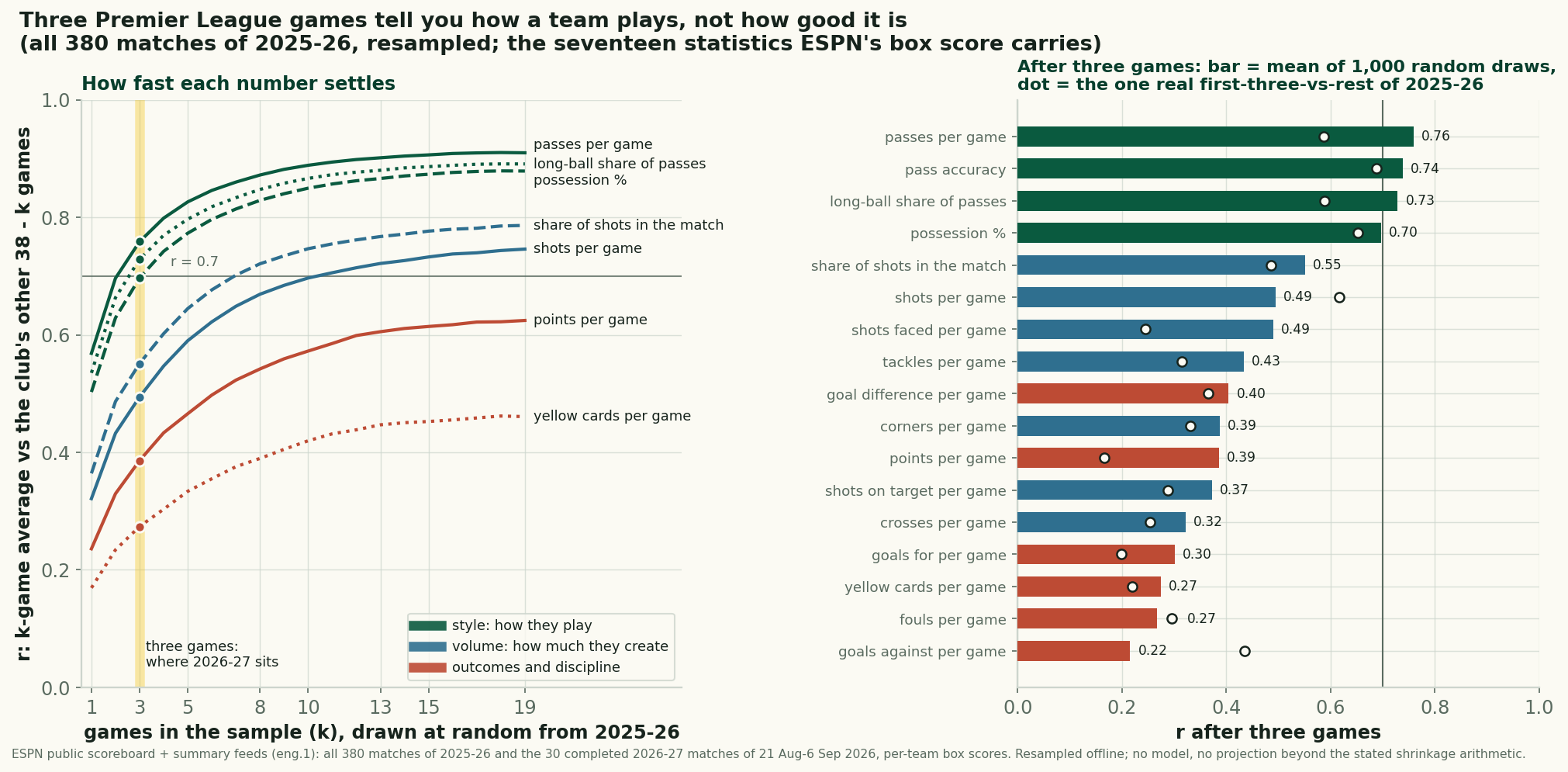
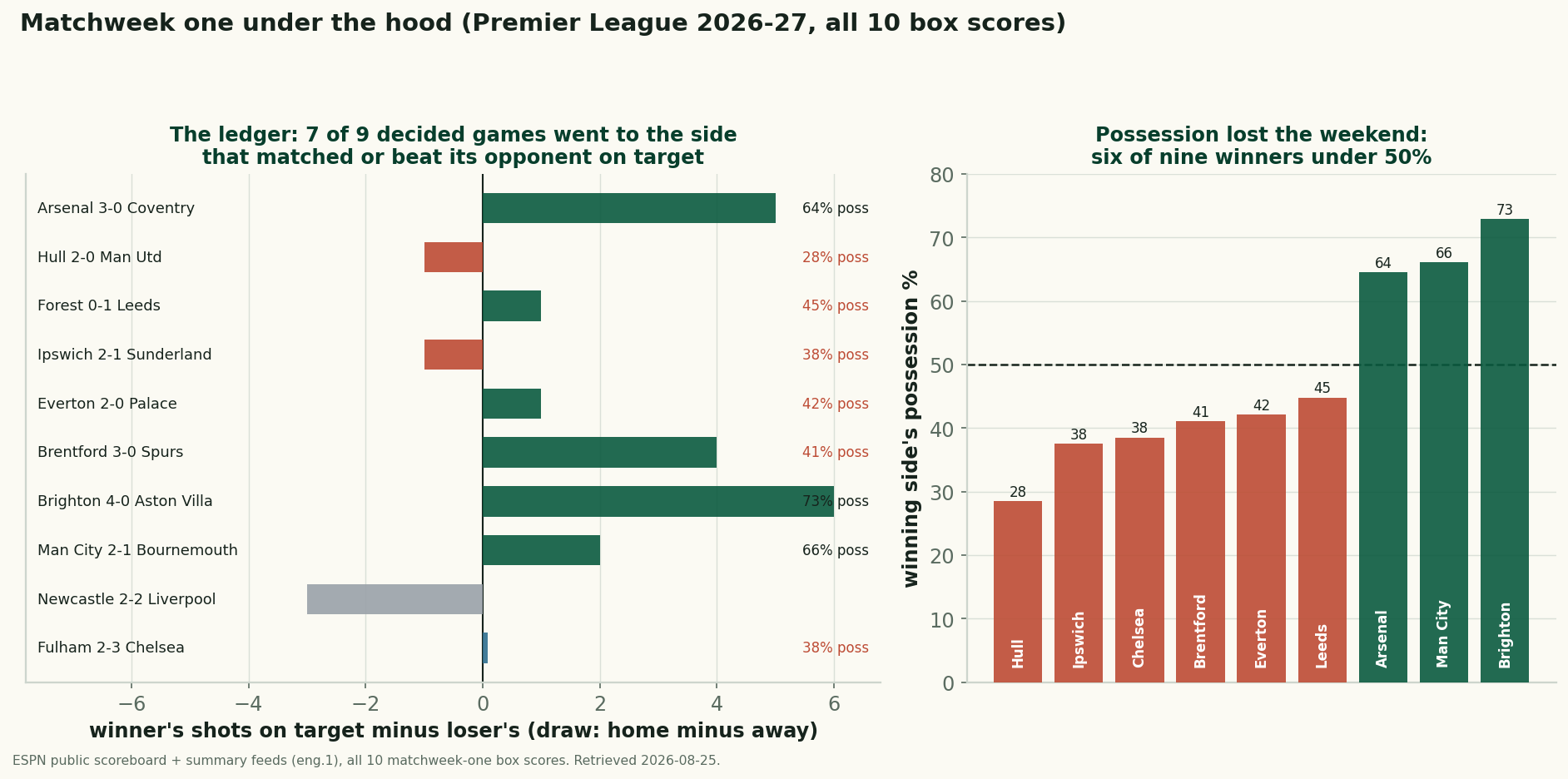
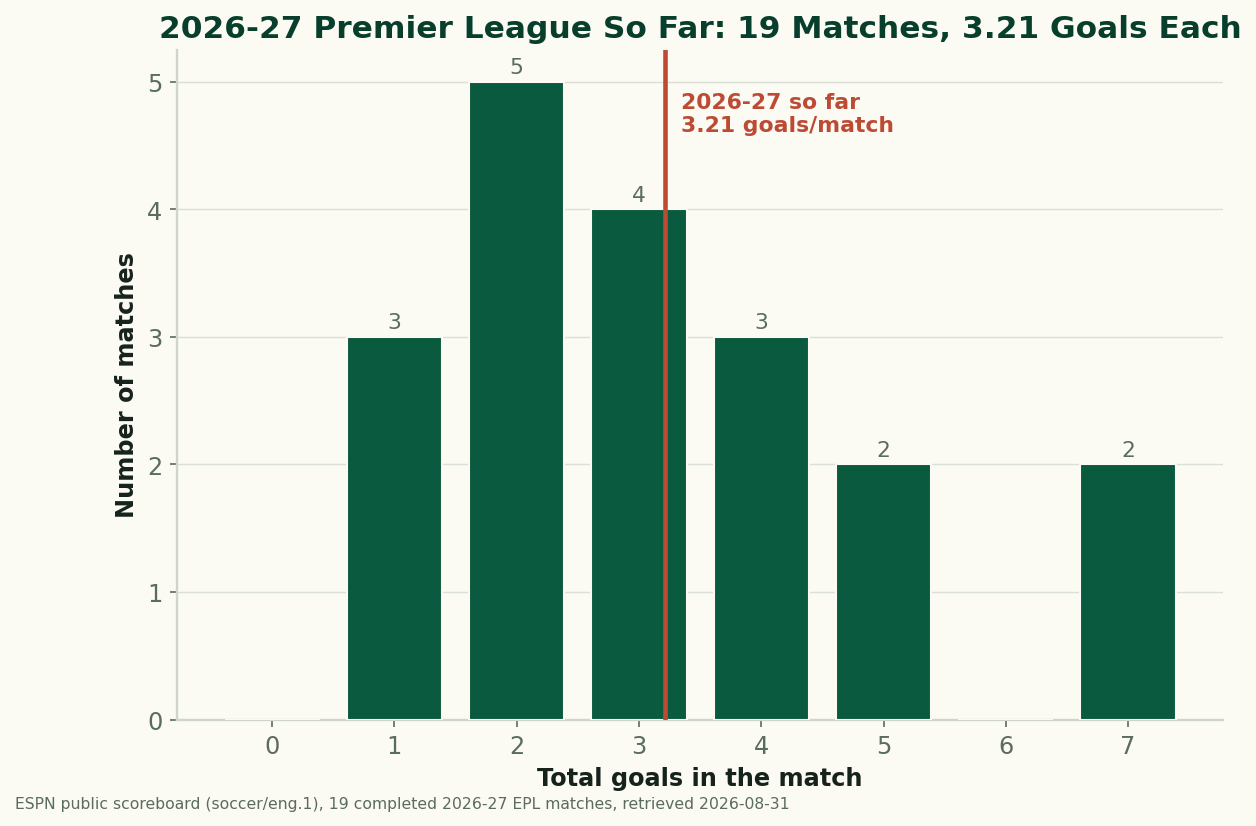
The 2026-27 Premier League tracked from completed matches only: goals per game, draws, home advantage and the shots-on-target rule. No predictions — just data.
Category · 28 articles
Long-form analysis, built from the raw event data.
These are the longer pieces — the ones that start with a question (Is home advantage really fading? What does a World Cup actually look like in the numbers?) and answer it by pulling thousands of events and letting the distribution speak.
Each deep-dive ships with the chart, the table, the source, the as-of date and the script. No vibes, no cherry-picked single games — just the data, aggregated honestly and visualised clearly.
The 2026-27 Premier League tracked from completed matches only: goals per game, draws, home advantage and the shots-on-target rule. No predictions — just data.
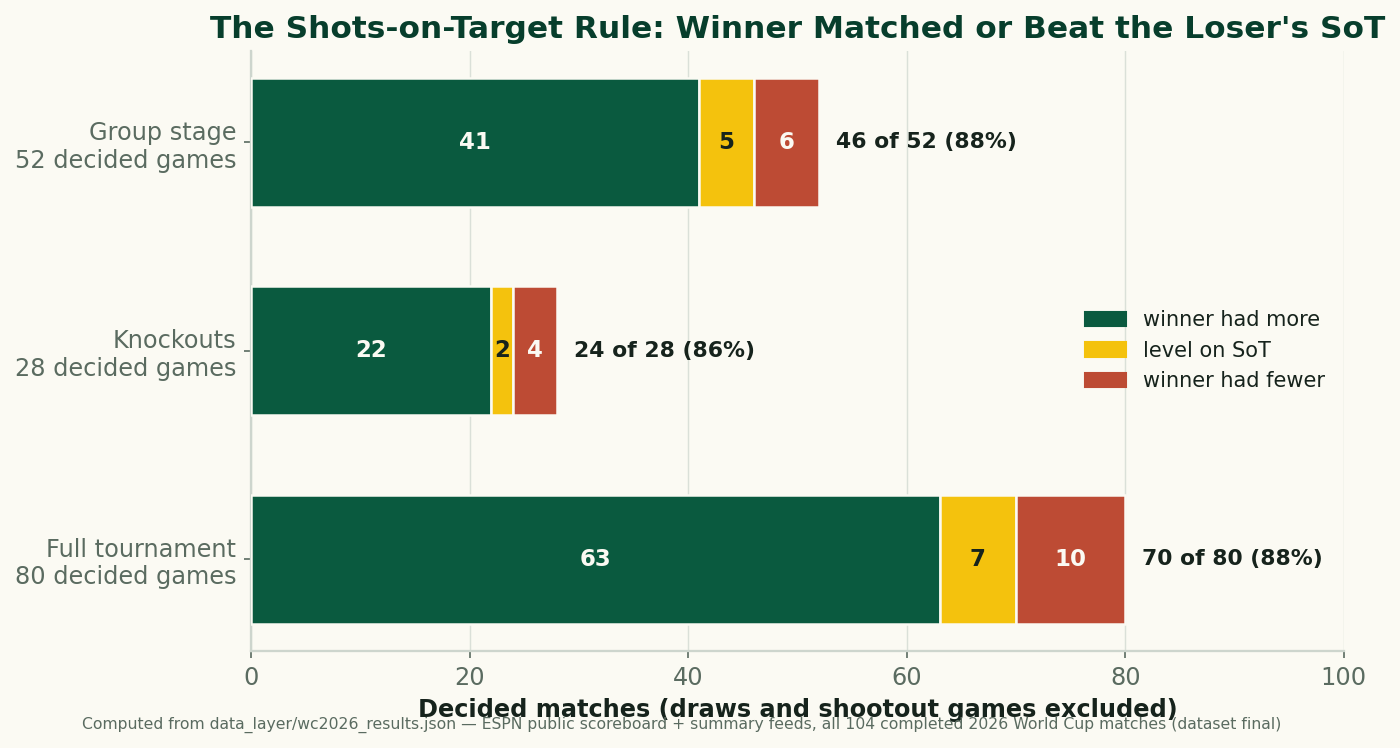
In decided 2026 World Cup games, the team matching or beating its opponent on shots on target won 70 of 80 — 24 of 28 knockouts. The ledger, and the next test.
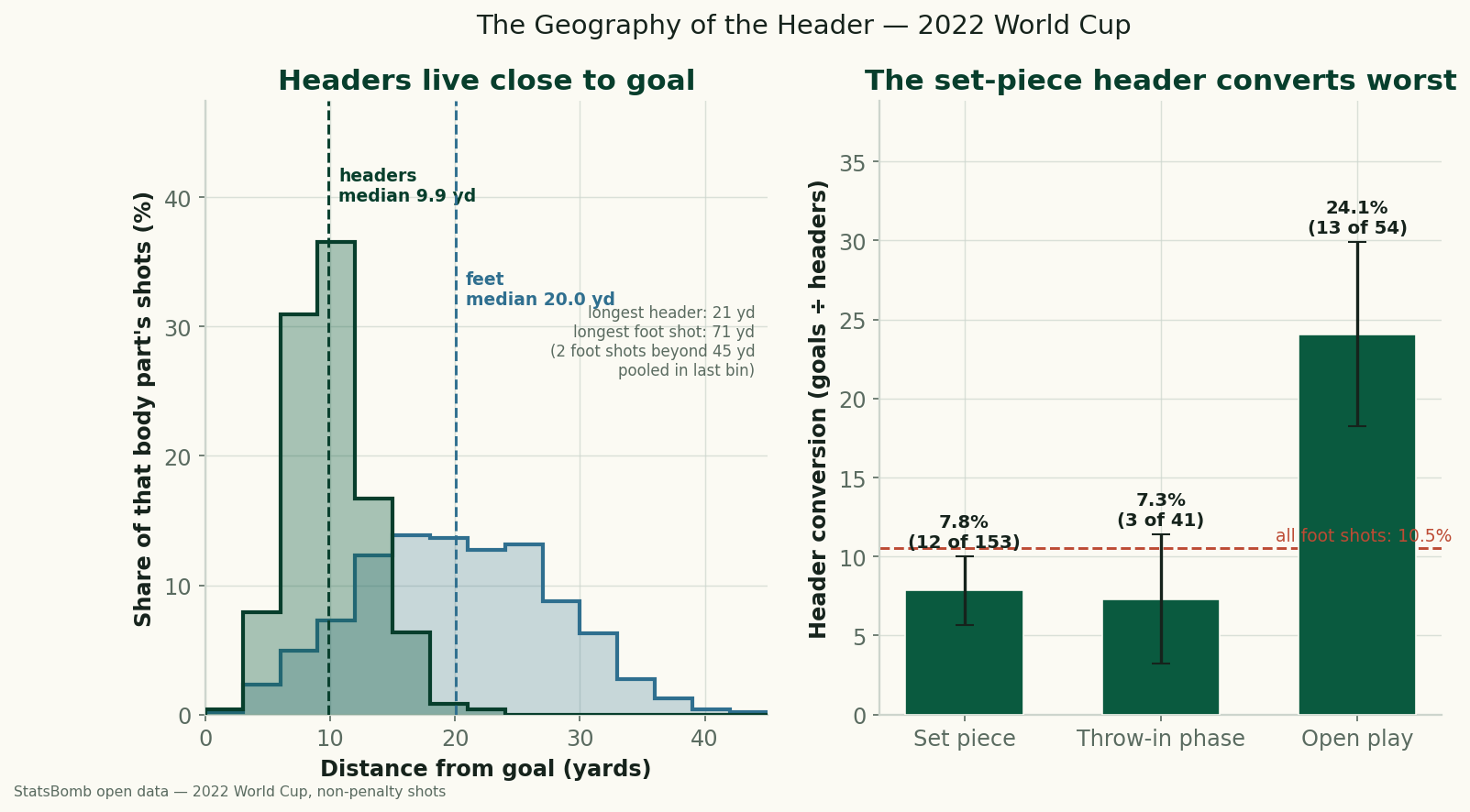
Headers were 18% of 2022 World Cup goals, taken from half a foot shot's distance — and open-play headers converted three times better than set-piece ones.
All 64 penalties of the 2022 World Cup: in-game kicks scored at 74%, shootout kicks 63%. Where they went, who saved them, and what 2026's shootouts inherit.
World Cup keepers saved 69% of on-target shots in 2022 — but 84% of weak ones and just 33% of big chances. A zone-by-zone, chance-by-chance census of every save.
Everyone 'knows' knockouts get cautious. But at the 2022 World Cup chance quality per shot was near-identical, and knockouts averaged more shots and goals.
Chance quality at the 2022 World Cup was wildly unequal: half of all open-play shots produced just 18 of 152 goals, while the top 5% accounted for 28%.
Across 1,178 open-play foot shots at the 2022 World Cup, volleys converted at 15.2% and half-volleys at 10.4% — both beating the 9.8% of settled 'normal' shots.
Across 1,430 open-play shots at the 2022 World Cup, only 34% forced a save or went in — the most common outcome is missing the target entirely (37%).
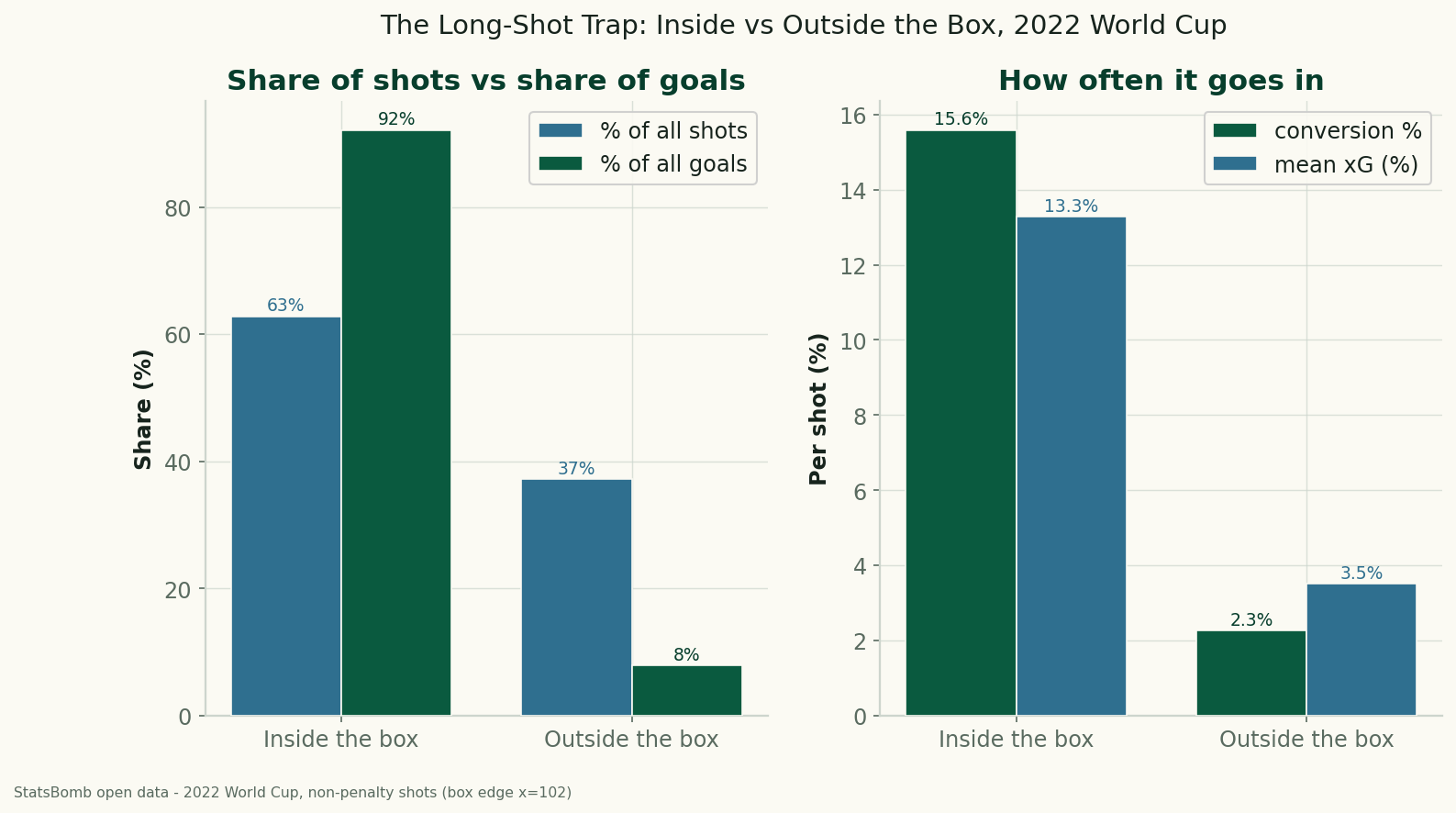
At the 2022 World Cup, shots from outside the penalty box were 37% of all attempts but produced just 8% of the goals — 2.3% conversion against 15.6% inside.
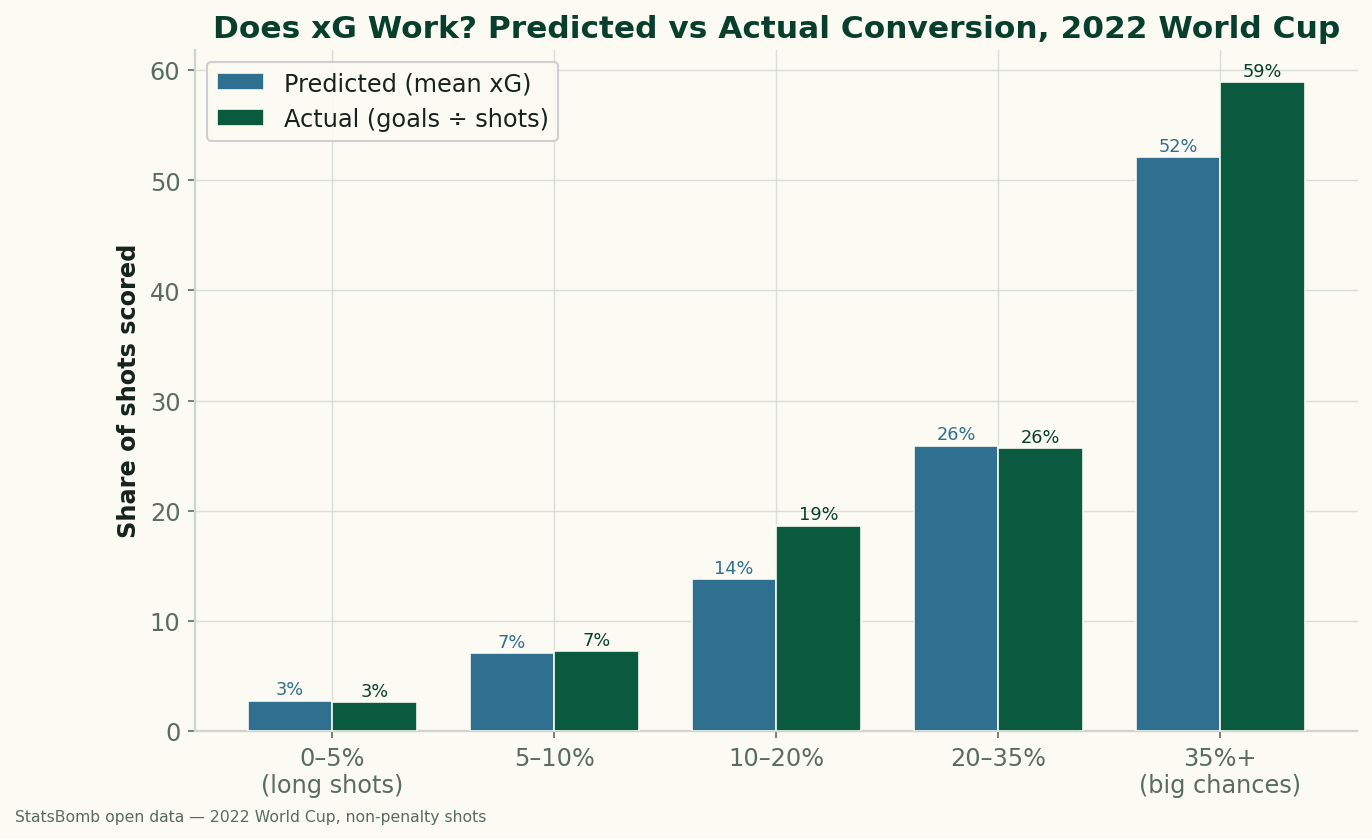
Every non-penalty 2022 World Cup shot, sorted by xG and checked against reality: 0–5% shots scored 2.6% of the time; 'big chances' of 35%+ went in 58.9%.
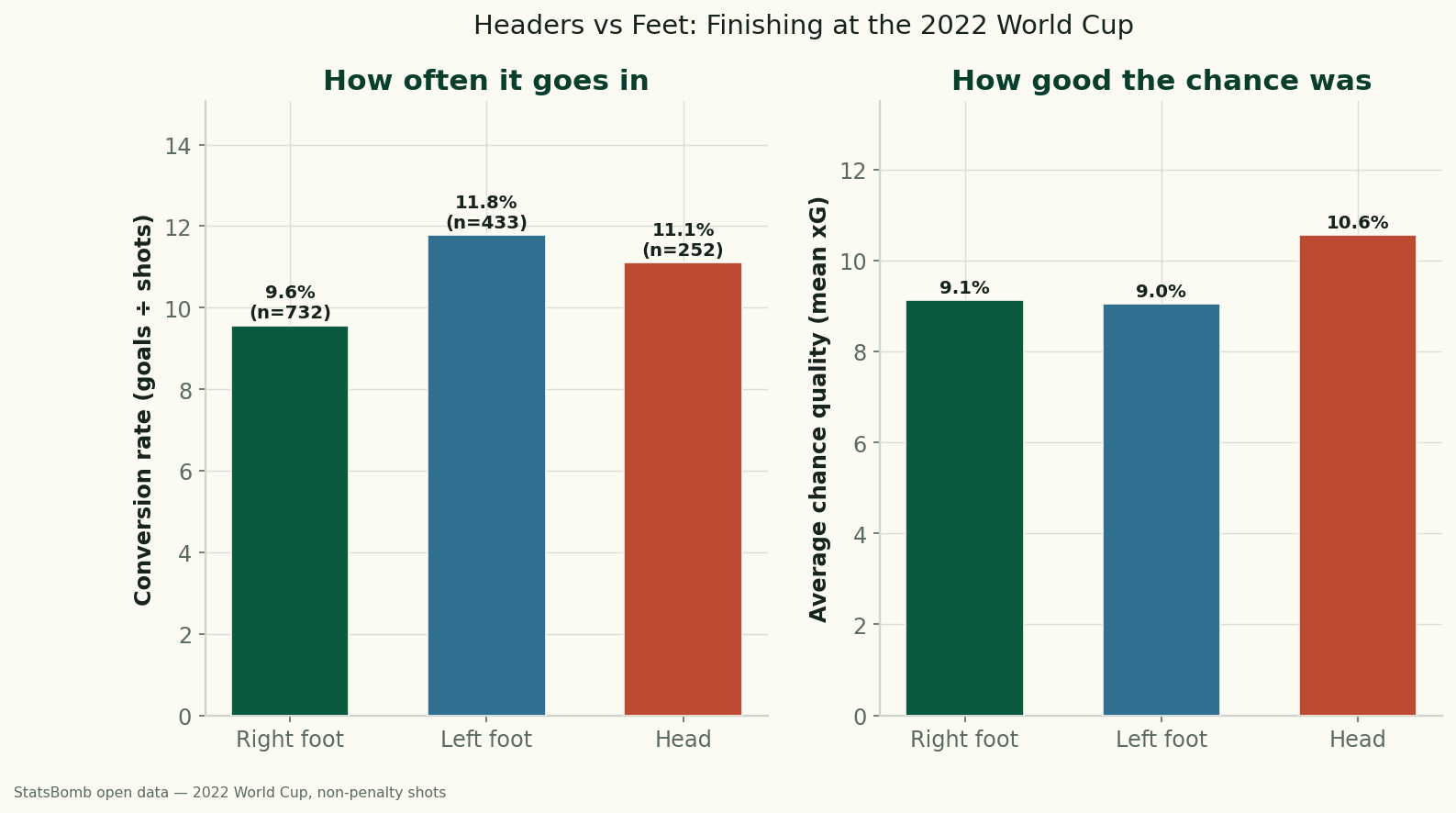
At the 2022 World Cup, headers and feet converted at almost the same rate (11.1% vs 10.5%) — but only because headers come from higher-quality positions.
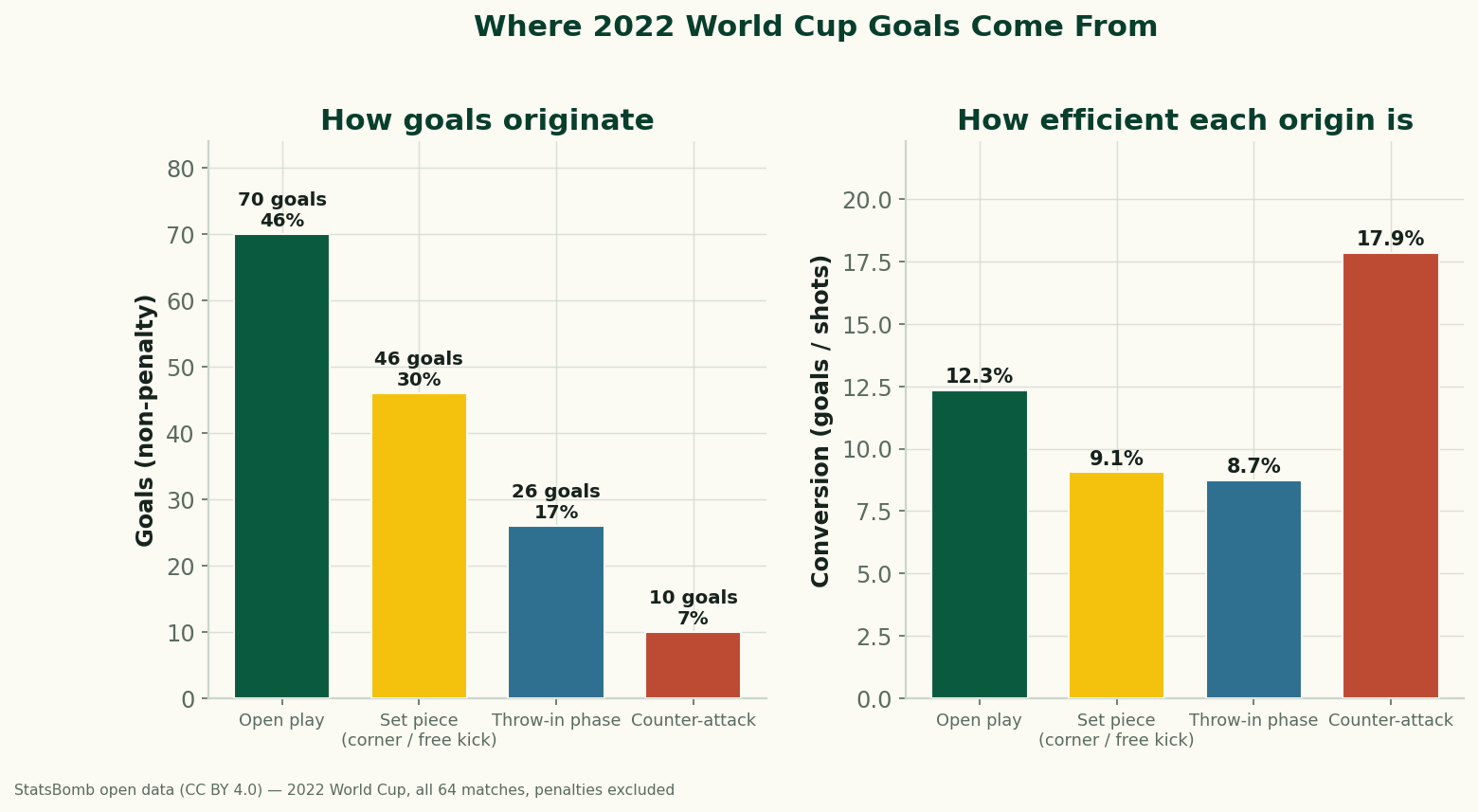
Tracing every 2022 World Cup goal to how the possession began: set pieces originated 30% of non-penalty goals, open play 46%; counters converted at 17.9%.
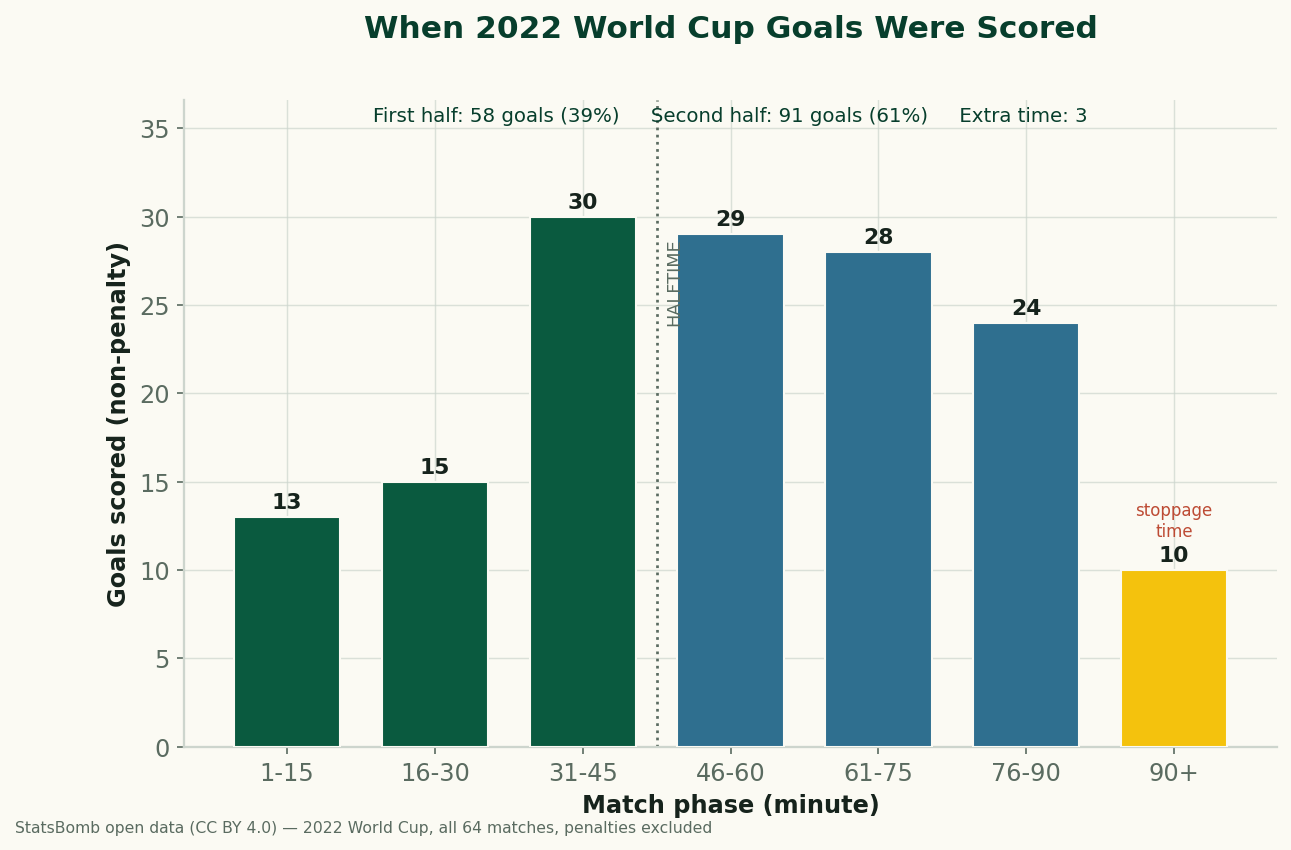
Mapping exactly when 2022 World Cup goals went in: the second half produced 61% to the first half's 39%, and stoppage time is wildly productive for its minutes.
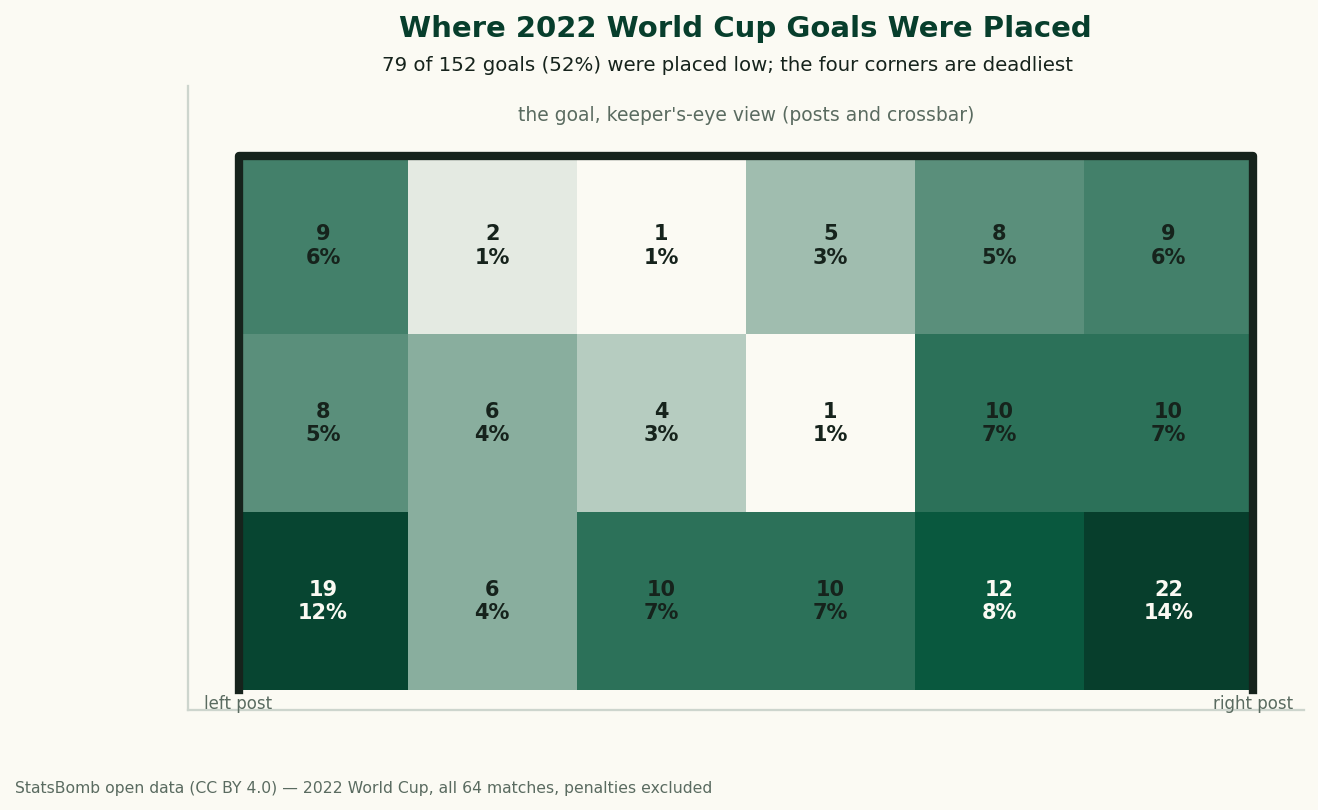
Using StatsBomb's end-location data for every goal of the 2022 World Cup, we map exactly where inside the goal frame the ball crossed the line.
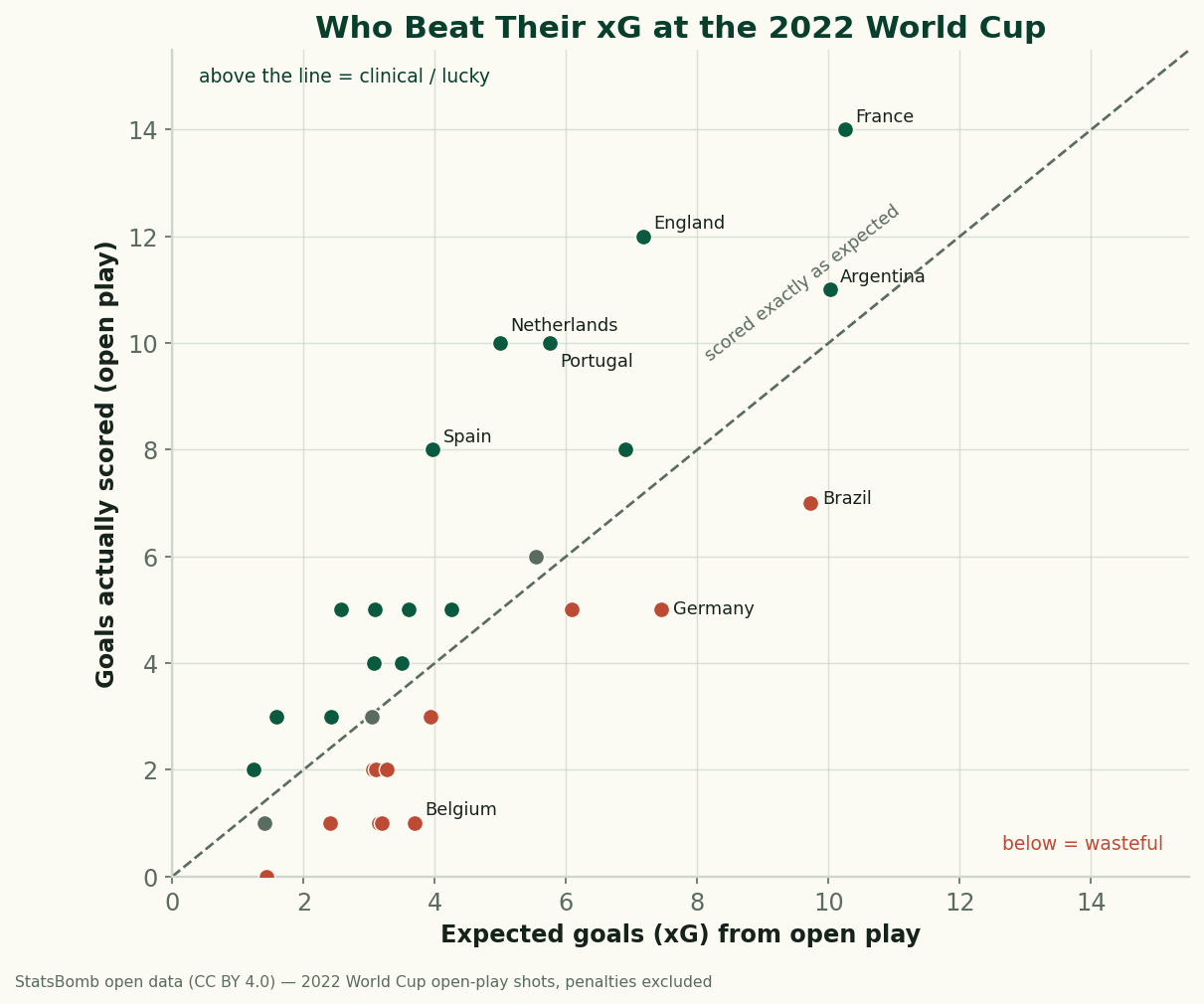
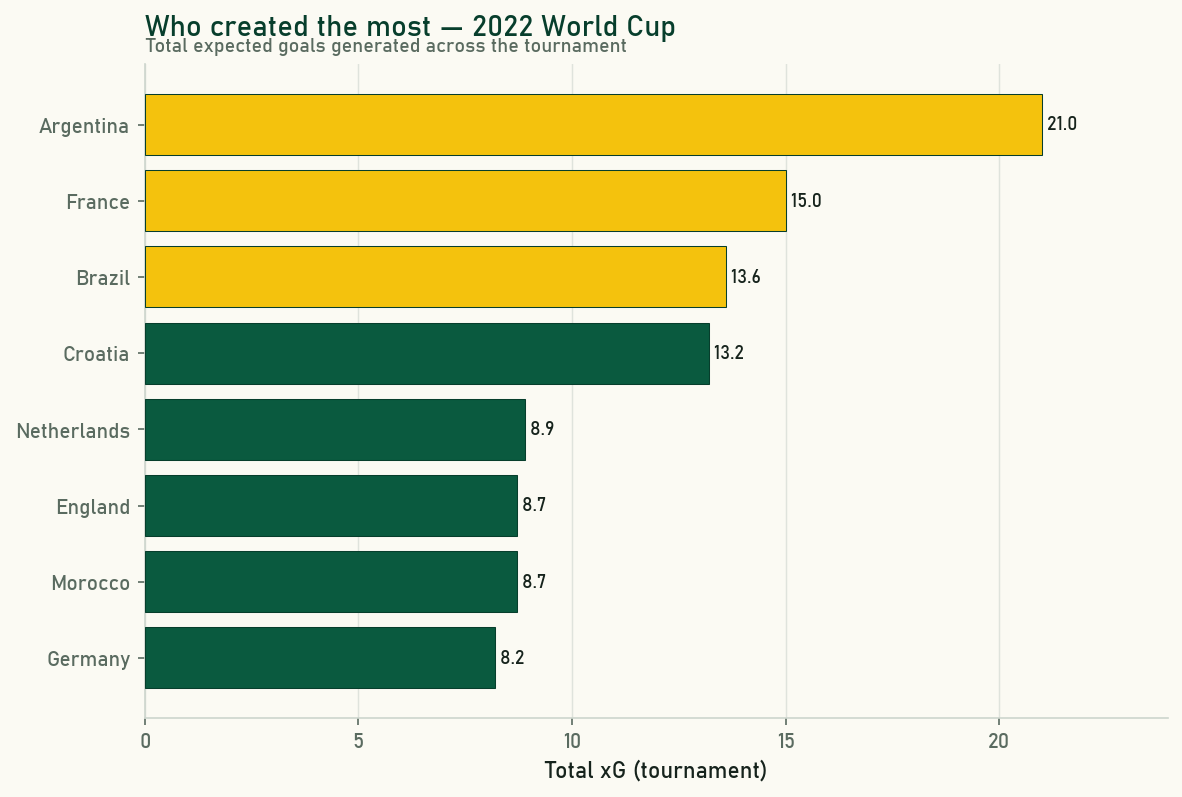
Using StatsBomb shot data for all 64 matches of the 2022 World Cup, we compare every team's goals to its xG. Finishing skill, hot streak, or luck?
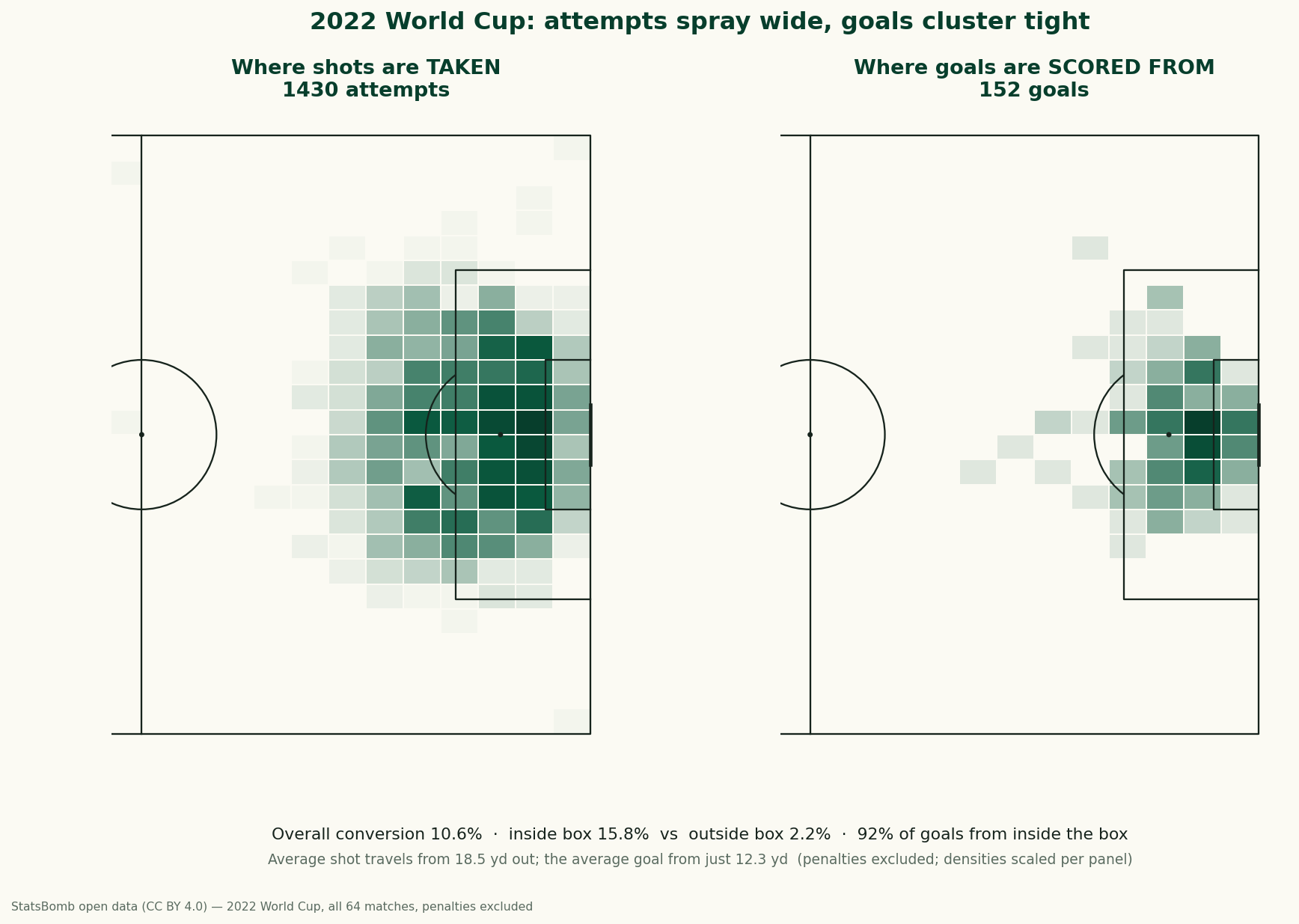
Using StatsBomb's free shot data for all 64 matches of the 2022 World Cup, we map where every shot was taken against where goals were actually scored from.
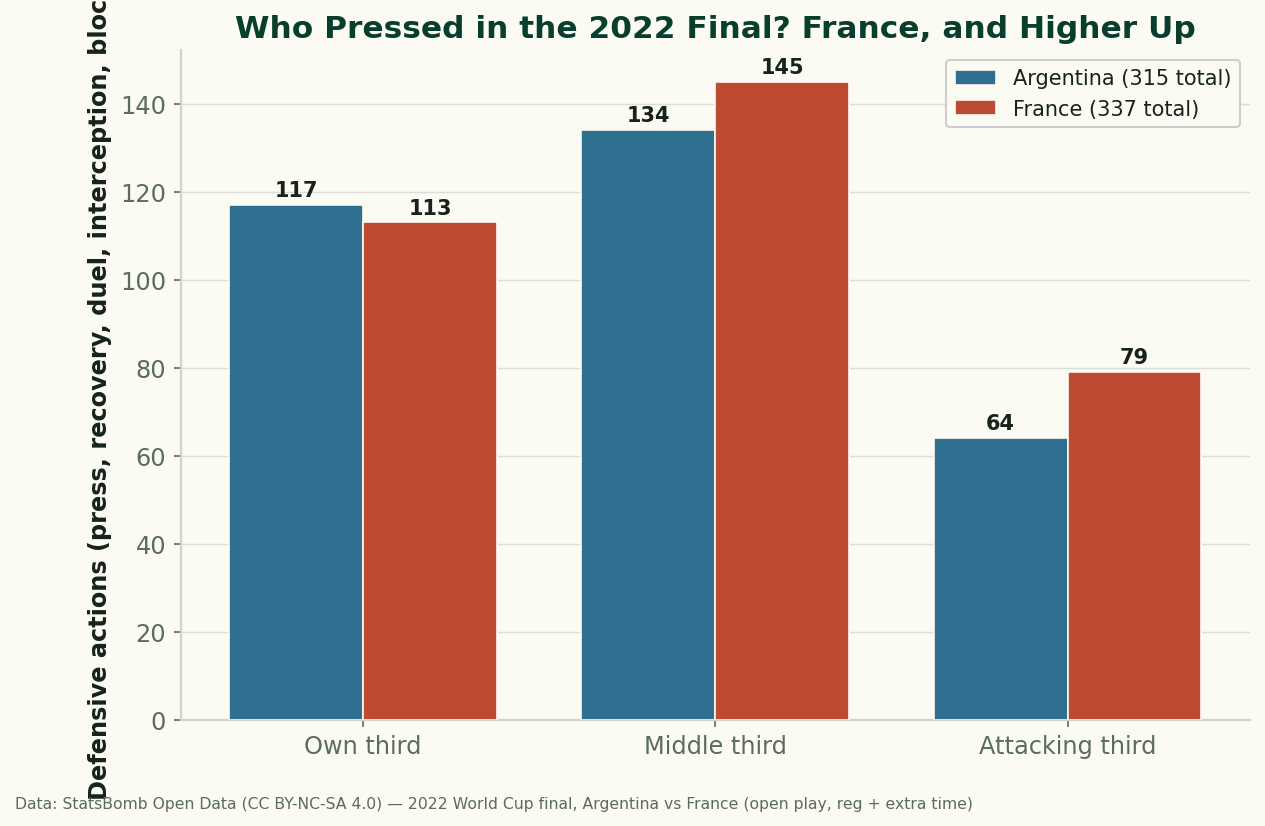
Argentina controlled the ball; France did the chasing. The StatsBomb event data shows France made more defensive actions and pressed higher up the pitch.
Argentina out-passed, out-completed, and out-territoried France in the 2022 final — and still needed penalties to win it. The scorecard, from real event data.
A results-level analysis of all 64 matches at the 2022 World Cup: goals by stage, the scoreline distribution, one-goal games, shootouts, and the extremes.
A shot-by-shot xG breakdown of Argentina 3–3 France from real StatsBomb event data — and why the open-play story is more lopsided than 3–3 looks.
The cutback — a ball pulled back from the byline to an arriving runner — produces some of the highest-value chances in football. The geometry behind it.
Football quietly went from three substitutes to five. How deeper benches reshaped late-game tactics, squad value, and who controls the closing minutes.
The most dangerous moments in football come right after a turnover. Why counterattacks produce higher-quality chances than settled possession.
Crossing feels like attacking; the data says it’s mostly inefficient. Why the average cross is a low-percentage play, and when it actually makes sense.
The penalty is the most studied shot in football - nearly identical every time, and converted about three times in four. The geometry and the keeper's dilemma.
A data-driven primer for the first 48-team World Cup - the new format by the numbers, and what recent tournaments tell us about goals and favourites.
Home advantage is real, measurable and - maybe - shrinking. A large sample of match results puts numbers on how big the edge is and where it comes from.